









Driving in Croatia 2026 | Mandatory Equipment and Documents
Planning a road trip to Croatia? 2026 brings a major overhaul of the road toll system, alongside a continuation of strict safety requirements. Find out what you need to pack in your car and which rules apply on Croatian roads.
Mandatory Vehicle Equipment | Croatia
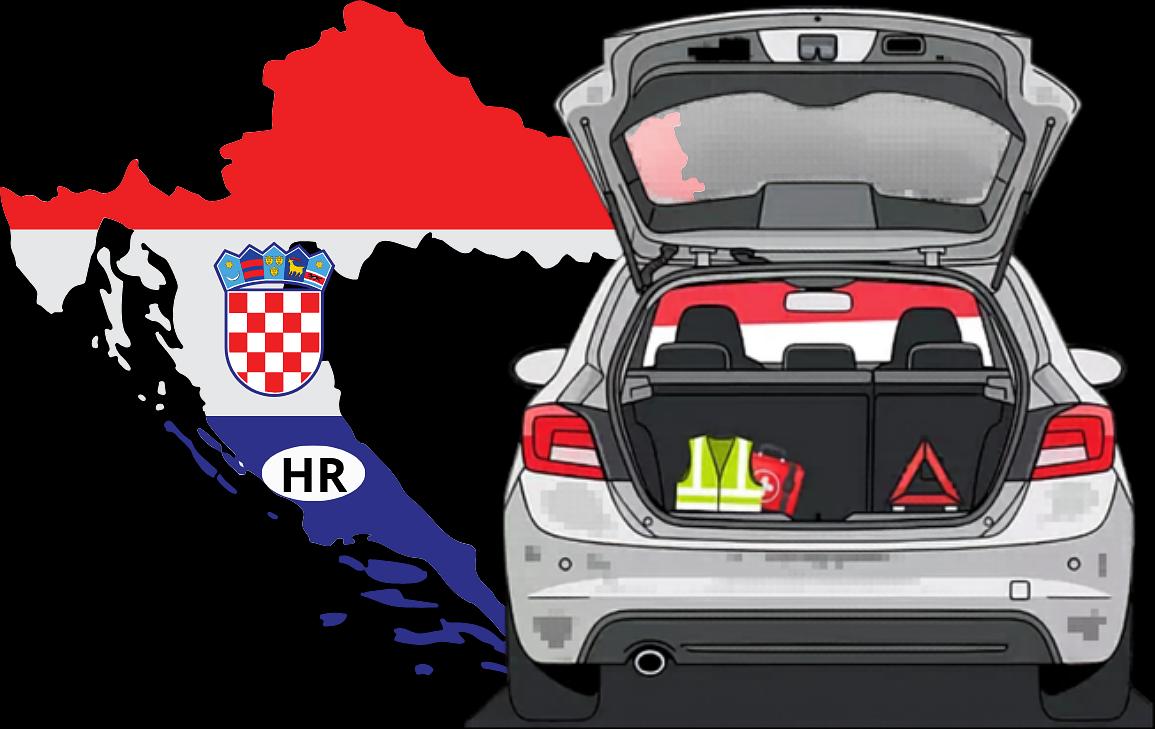
Croatia takes vehicle safety very seriously. Although the Vienna Convention suggests that a car should be equipped according to the rules of its country of registration, Croatian police often enforce their own requirements on all drivers. Mandatory vehicle equipment in Croatia includes:
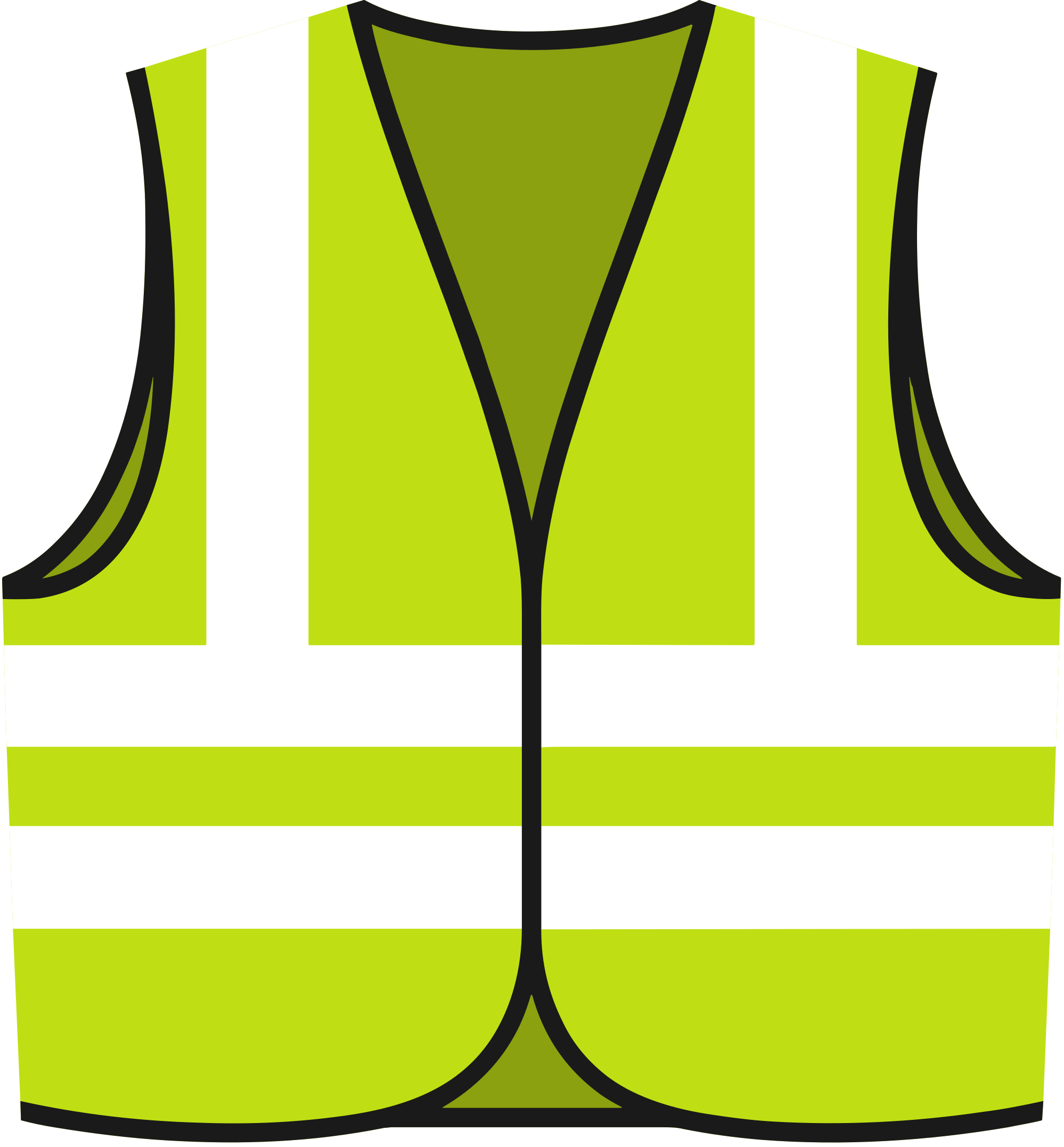
Reflective vests
Must be kept in the cabin, for all passengers getting out of the car outside built-up areas
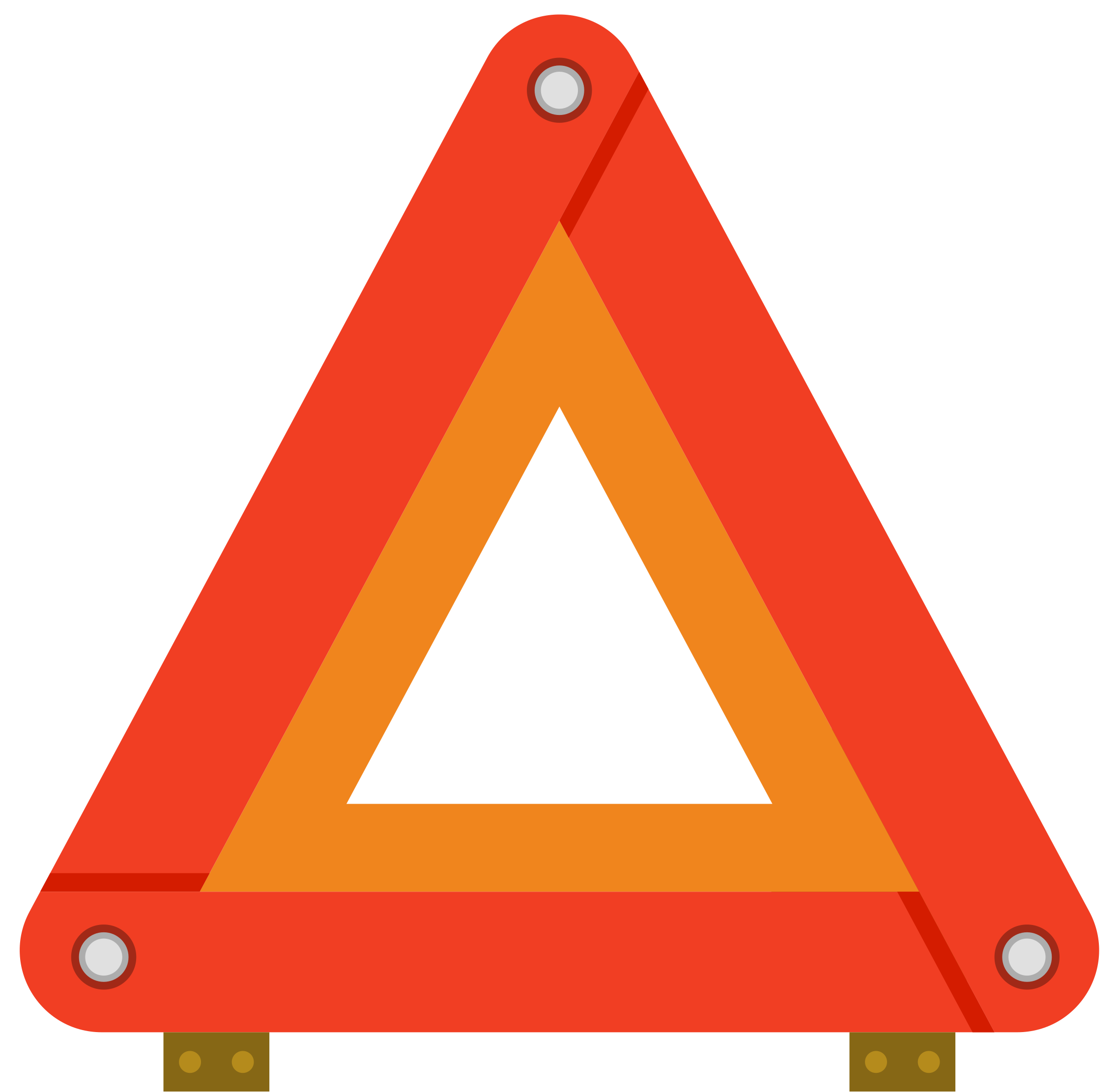
Warning triangle
Two triangles are required when towing a trailer

First-aid kit
Compliant with DIN 13164
Spare wheel / repair kit
Or another system allowing you to keep driving after a minor breakdown, e.g. a flat tyre
Good to know
A fire extinguisher is recommended, but mandatory mainly for category N vehicles (trucks/vans). Reflective vests must be kept in the vehicle's cabin - not in the boot - so they are accessible before getting out of the car. Interestingly, spare bulbs are not required in Croatia for cars fitted with LED, xenon or neon lights.
Mandatory Documents | Croatia
From 2026, the European Union, including Croatia, is rolling out digital systems, but classic paper documents remain valid. When travelling by car around Croatia, you must always carry:
- Passport or ID card - Croatia is part of the Schengen Area, but an identity document is still required for identification purposes.
- Driving licence - An EU driving licence is fully recognised.
- Vehicle registration document - with a valid technical inspection.
- Third-party liability insurance - A standard EU policy is sufficient. A Green Card is not required, although it may simplify formalities in the event of a collision.
- EHIC + Travel Insurance - Private travel insurance is strongly recommended, as the EHIC card does not cover the cost of medical transport back to your home country.
Reminder
If you are travelling with non-EU nationals (e.g. from visa-exempt countries), ETIAS authorisation may be required from 2026 before entering the Schengen Area. Check the current requirements before you travel.
Major Change in 2026: New Toll System | Free-Flow
2026 marks the phasing out of traditional toll booths (barriers) on Croatian motorways. Work out what your route will cost with our Croatian road toll calculator. This is a major change that every driver heading to Croatia should know about.
Removing the toll booths - what does it mean in practice?
By the end of the 2026 summer season, most traditional barrier-style toll booths are set to be replaced by camera gantries. The Free-Flow system means you drive through the gantry without stopping, and the toll is charged automatically.
How do tolls work under the Free-Flow system?
The Free Flow system is based on two methods: DSRC (5.8 GHz radio communication, used by maut1 and existing ENC devices) and ALPR (automatic number plate recognition).
Tolls under the Free Flow system are charged automatically based on:
- Number plate - requires prior online registration and linking a payment card.
- On-board device (ETC/ENC) - a new-generation unit that allows seamless passage.
Traditional cash payment to a toll collector is becoming a thing of the past. When planning your trip for summer 2026, be sure to check hac.hr (HAC — Croatian Motorways) to register your vehicle, or purchase a maut1 device.
Important
Before travelling to Croatia in the 2026 summer season, register your vehicle and link a payment card on hac.hr, or purchase a maut1 device. Failing to register may result in problems settling your road tolls.
Order your toll box online!
With the tollpass maut1 on-board device for automatic payments, you can settle up and gain the ability to use fast lanes without a barrier. Available for vehicles up to 3.5 tonnes.
Order maut1Key Traffic Rules | Croatia
Dipped Headlights
Dipped headlights are mandatory at night and during the day in winter (from the last Sunday of October to the last Sunday of March). It is recommended to drive with your lights on all year round.
Speed Limits in Croatia
| Road type | Speed limit |
|---|---|
| Motorways | 130 km/h |
| Expressways | 110 km/h |
| Built-up areas | 50 km/h |
Good to know
In Croatia's tourist cities such as Split, Dubrovnik or Zadar, the police make very efficient use of tow trucks. Badly parked foreign cars are towed away first. Always use marked parking spaces. If you're travelling around Croatia in a camper van, be sure to check the parking and overnight stay rules in our guide travelling through Croatia by camper.
What is the legal blood alcohol limit in Croatia?
The permitted blood alcohol level in Croatia is 0.5‰. Note: for professional drivers and drivers under 24, the limit is 0.0‰.
Phones and electronic devices in Croatia
Using a phone without a hands-free kit is strictly penalised. Fines start from 130 EUR upwards. Always use a hands-free kit or headset while driving.
Forget the queues at toll booths!
Click the button below to order the maut1 on-board device for payments on Croatian motorways. Automatic billing and access to fast lanes. For vehicles up to 3.5 tonnes.
Order maut1Croatia by car | Summary
Mandatory vehicle equipment in Croatia includes reflective vests for all passengers (kept in the cabin), a warning triangle, a first-aid kit compliant with DIN 13164, spare bulbs, and a spare wheel or repair kit. 2026 brings a revolution in the toll system - traditional booths are being replaced by the free-flow system, so register your vehicle on hac.hr before you travel. Remember to carry all your documents and observe the speed limits.
Have a safe journey!


